
A reflection on the first year progress of the Europe’s groundbreaking battery recycling initiative
Battery Recycling: Key to Europe’s Green Transition
Batteries are a key enabler of the EU’s green transition, enabling electrification, renewable energy storage, and long-term climate goals. However, Europe’s heavy reliance on imported battery raw materials—87% for bauxite, 86% for cobalt, 100% for lithium, and 98% for natural graphite—remains a significant vulnerability to its dream of a sustainable energy future. This dependence costs the EU economy billions of Euros annually, weakens supply chain resilience, and ultimately undermines the very climate and sustainability objectives the green transition seeks to achieve.
Recycling spent lithium-ion batteries represents a key opportunity to establish a more sustainable supply of critical raw materials for battery manufacturing. Europe is expected to experience a sharp increase in battery scrap in the coming years, yet current recycling infrastructure and practices are not equipped to manage this growth efficiently and sustainably. Modernizing and scaling up battery recycling systems is essential to improve material recovery, reduce environmental impacts, strengthen strategic autonomy, and ultimately enable the transition to a sustainable energy system by closing the loop on battery materials.
BeyondBattRec’s Ambitious Targets and Innovative Approach
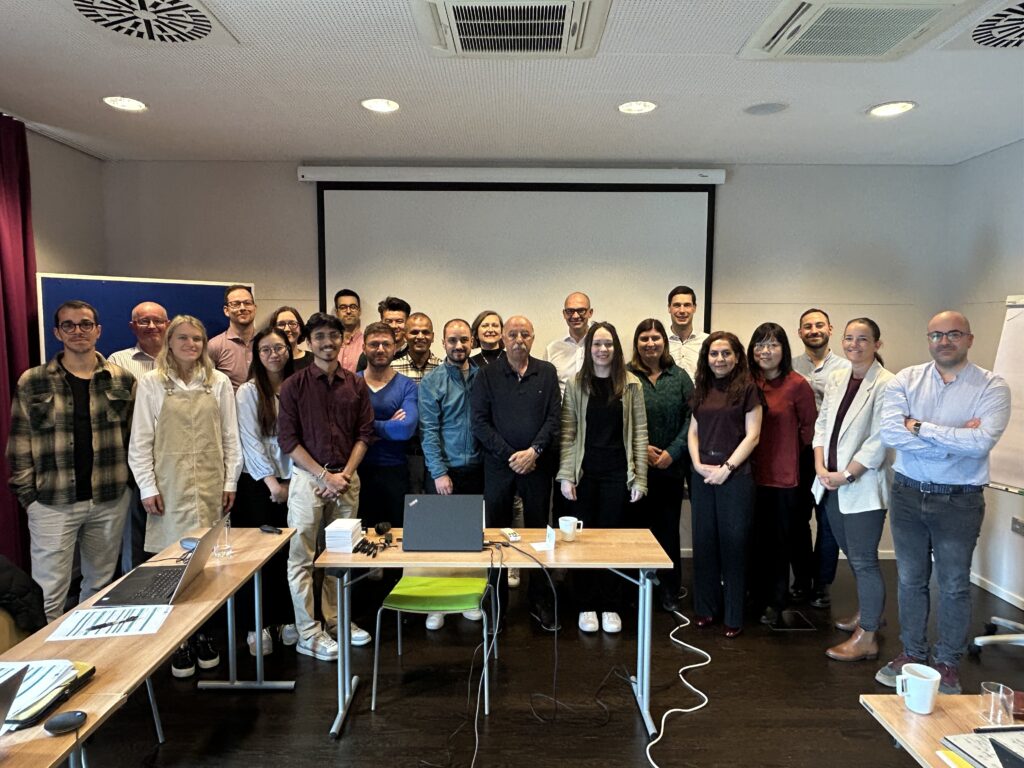
BeyondBattRec project brings together 12 leading partners from seven European countries to transform lithium-ion battery recycling. Launched in December 2024 with €7.45 million in Horizon Europe funding, our consortium unites industry giants like VARTA Microbattery and Siemens, recycling specialists, and research institutions from all over Europe. Over the four-year project duration (December 2024 to November 2028), we are developing and validating innovative technologies across the entire battery recycling value chain.
The project sets clear and challenging objectives: achieving recovery rates of up to 95% for critical metals such as cobalt, nickel, and copper, enabling the reuse of more than 70% of total battery weight, and reducing CO₂ emissions by 50% compared to current recycling practices. These targets are fully aligned with EU circular economy goals and the European Battery Regulation.
Beyond material recovery, BeyondBattRec integrates circular economy principles from the outset by ensuring that recovered materials are suitable for direct reuse in new battery production. The project combines intelligent sorting systems to maximise module recovery, safe deactivation protocols, precise dismantling techniques, and advanced separation processes for both metallic and non-metallic components. In parallel, we are developing state-of-health testing methods to identify batteries suitable for second-life applications, extending their useful lifetime before recycling.
To validate the environmental benefits of these innovations, comprehensive life cycle assessments are being conducted, providing robust evidence of reduced environmental impacts. Together, these advances represent a step change in battery recycling technology and establish new performance benchmarks for the industry.
Foundations Established for a Sustainable Battery Recycling
Looking back, the first year has been very busy in building a strong consortium, setting up experimental frameworks, and establishing a collaborative pathway toward more efficient and sustainable battery recycling. In parallel, we have made interesting technological progress towards developing safe deactivation protocols, innovative dismantling techniques, and advanced separation processes for both metallic and non-metallic components. With these foundations in place, we are ready to push the boundaries of innovation and deliver a step change in efficient, sustainable battery recycling.